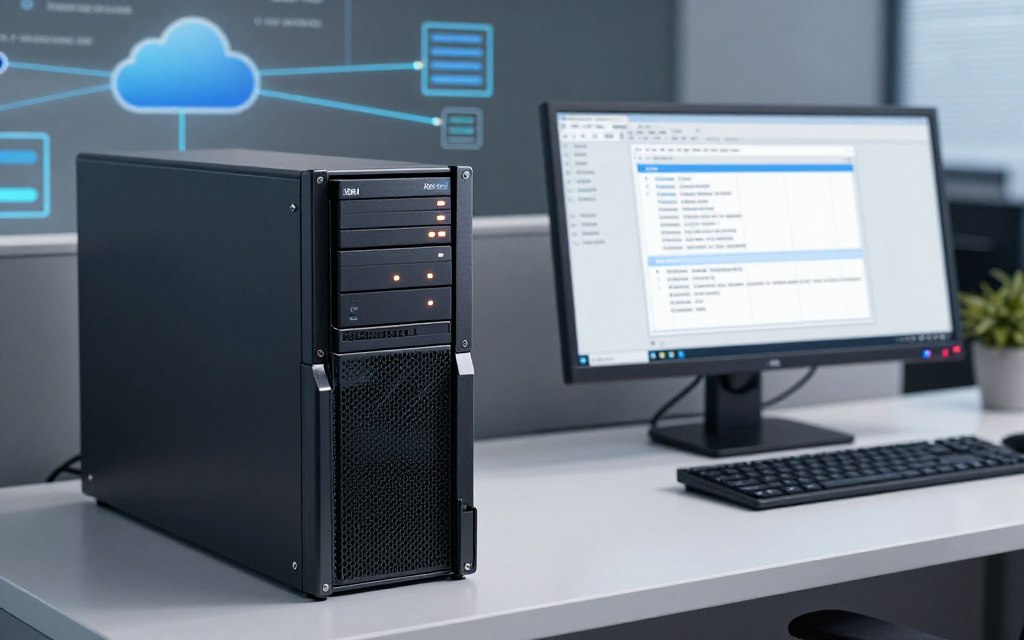

This guide answers the question, what is as400 computer system? Launched by IBM in 1988, this reliable midrange server has evolved greatly. Although it became IBM i, IT professionals and businesses still use the name “AS400.”
This article explains the AS400 platform, its operating system, and its architecture. It examines the system’s history, technical specifications, industry applications, advantages, and lasting business value. Readers will also see why it remains relevant in today’s business environments.
We also discuss modernization paths for organizations that want to use this legacy AS400 system effectively. IT experts, business leaders, and technology enthusiasts can use this guide as a resource. It explains the system’s role in modern enterprise infrastructure.
Key Takeaways
- The AS400 platform is a long-standing and reliable enterprise computing solution.
- Originally introduced by IBM in 1988, it has evolved into IBM i.
- The term “AS400” continues to be widely used in the industry.
- This guide will cover the system’s history, architecture, and applications.
- Modernization options for the AS400 are crucial for businesses today.
What Is an AS400 Computer System?
The AS400 platform is a cornerstone of IBM midrange systems. It combines hardware and software in one solution for small to mid-sized businesses. Released in 1988, the AS400 became IBM i and still serves enterprises reliably and efficiently.
Defining the AS400 Platform
The AS400 system provides a unified computing experience. It combines a proprietary operating system, a strong database, and hardware in one platform. This design simplifies management, improves performance, and suits departmental computing and business applications.
Core Components of the System
Understanding the AS400 system’s core components helps users gain its full benefits. Its key elements include:
| Component | Description | Functionality |
|---|---|---|
| Hardware Layer | Includes processors, memory, and storage | Provides the physical infrastructure for operations |
| Operating System | Originally OS/400, now IBM i | Manages system resources and applications |
| Integrated Database | DB2 for i | Supports data storage and retrieval |
| Object-Based Architecture | Unique design structure | Facilitates efficient application development and management |
Together, these components set the AS400 apart from standard server platforms. They also improve reliability and performance across many business environments.
The History and Evolution of the AS400
The AS400 computer system began in 1988 as a successor to IBM’s System/38 and System/36 platforms. It offered a simple, integrated environment for businesses without large IT departments. For its time, the original hardware was strong, with multiple users and the powerful OS/400 operating system.
In the late 1980s, companies wanted affordable systems that could meet their computing needs without large-system complexity. The AS400 quickly succeeded because of its reliability and ease of use.
Origins at IBM in 1988
In 1988, IBM launched the AS400, marking an important moment in the company’s history. It served small to medium-sized enterprises and combined hardware and software smoothly. This design helped businesses run applications efficiently.
The AS400 supported backward compatibility, a key feature. Organizations could move from older IBM systems without losing existing applications. Companies could upgrade without facing major costs, which helped drive widespread adoption.
Transition to IBM i and Power Systems
Over time, the AS400 became the eServer iSeries and then the System i. Today, it is IBM i and runs on IBM Power Systems hardware. This change shows IBM’s focus on innovation while preserving the AS400’s legacy.
Legacy system modernization is now a key focus for organizations using AS400 technology. Many companies want modern infrastructure while keeping their existing applications. This approach uses modern hardware and cloud solutions without losing past investments.
| Year | Event | Description |
|---|---|---|
| 1988 | Launch of AS400 | Introduced as a successor to System/38 and System/36. |
| 2000 | eServer iSeries | Rebranding to reflect the integration of server technologies. |
| 2008 | System i | Further evolution of the platform to meet modern needs. |
| 2010 | IBM i | Current branding, focusing on integration with Power Systems. |
Understanding IBM i: The Operating System Behind AS400
The AS400’s power comes from the IBM i operating system and its strong integration. It combines essential components in one cohesive environment. Windows and Linux require separate installations for the operating system, database, and middleware, but IBM i combines them.
The IBM i operating system uses an object-based architecture. This design uses resources efficiently and makes application development easier. Single-level storage keeps all data accessible in a simple way, which improves usability.
Another key feature is the Technology Independent Machine Interface (TIMI). It lets applications run unchanged across hardware generations, giving businesses flexibility and longer use. Organizations can upgrade hardware without extensive application rewrites.
What Makes IBM i Unique
IBM i stands out through its fully integrated approach. The IBM i integrated database, known as DB2 for i, sits within its architecture. This design gives users seamless data access and reduces separate database administration.
IBM i also has strong built-in security features. Object-level security lets each database object have its own security settings. This detailed control blocks unauthorized access, while native authentication and auditing support various security standards.
Integrated Database and Security Features
DB2 for i is embedded in the IBM i operating system, creating several advantages. Organizations gain less complexity and better performance because data management is streamlined. This integration supports real-time analytics and reporting for informed decisions.
IBM i security features are part of the system’s design, not an add-on. Comprehensive auditing lets businesses track access and changes to sensitive data, helping maintain regulatory compliance.
| Feature | Description | Benefit |
|---|---|---|
| Object-Based Architecture | Allows efficient resource use and simplifies development. | Enhanced application performance and easier management. |
| Single-Level Storage | All data is accessible in a unified manner. | Simplified data management and improved usability. |
| Integrated Database | DB2 for i is embedded within the OS. | Streamlined data access and reduced administration. |
| Security Features | Object-level security and user authentication. | Enhanced protection and compliance assurance. |

Key Features and Architecture of AS400 Systems
AS400 architecture blends hardware and software into one strong system. This design supports reliable performance for organizations with demanding business needs. Understanding it helps businesses use the system’s full potential.
Hardware Architecture
AS400 hardware uses IBM’s POWER processors, which feature a RISC-based design. This approach improves speed and efficiency by optimizing instruction processing. Single-level storage treats memory and disk as one address space, simplifying data management.
Power Processors and Memory Design
Modern AS400 systems use advanced POWER processors with strong computing power. Their memory design supports smooth data access and processing. Together, these features help applications run well under heavy workloads.
System Reliability and Built-in Redundancy
Reliability remains a key strength of AS400 systems. They include redundant power supplies and hot-swappable parts to reduce downtime. Error detection and correction protect system integrity for critical business applications.
Software Integration Capabilities
AS400 systems support software integration through IBM i object-based design. This design treats programs, files, devices, and user profiles as objects. Each object has defined attributes and security settings, simplifying management and improving protection.
Native I/O and Object-Based Design
Native I/O processing gives AS400 systems another important advantage. Unlike traditional systems, AS400 handles I/O through the operating system instead of device drivers. This simplifies management and improves security by reducing possible weaknesses.
| Feature | Description | Benefit |
|---|---|---|
| POWER Processors | RISC-based architecture for high performance | Efficient processing of complex tasks |
| Single-Level Storage | Unified address space for memory and disk | Simplified data management |
| Redundant Components | Hot-swappable parts and redundant power supplies | Minimized downtime and increased reliability |
| Object-Based Design | Treats all elements as objects | Enhanced security and simplified management |
Common Uses of AS400 in Modern Business
Many businesses use AS400 applications in daily operations. The platform supports key areas, including Enterprise Resource Planning (ERP), transaction processing, and custom application development. These uses show why many organizations still choose AS400 technology.
Enterprise Resource Planning (ERP)
AS400 systems have long supported AS400 ERP solutions. Examples include JD Edwards and Infor LX, first developed for AS400 and still running on IBM i today. Its integrated database and reliability help companies manage resources, streamline operations, and boost productivity.
Transaction Processing and Data Management
The AS400 architecture supports high-volume AS400 transaction processing. It suits tasks such as order processing, inventory management, and financial transactions. Businesses can handle many concurrent transactions reliably, even during peak times.
Custom Application Development
Organizations build tailored AS400 applications with languages such as RPG, COBOL, and Java. These applications can provide a competitive advantage decades after their initial development. The AS400 helps businesses adapt, innovate, and meet unique needs and challenges.
In today’s business environment, the AS400 remains a robust platform for ERP, AS400 transaction processing, and custom application development. For more insights into the AS400 and its applications, read this detailed guide.
Industries That Rely on AS400 Computer Systems
AS400 computer systems remain vital across many industries. Their reliability, security, and efficiency serve sectors requiring strong performance and strict compliance. These strengths explain their lasting role in enterprise computing.
Banking and Financial Services
Banking and financial institutions use AS400 systems for core banking, transaction processing, and regulatory compliance. The platform’s IBM i security protects sensitive data from breaches. This makes it a trusted choice for banks and credit unions.
AS400 audit tools help financial organizations meet industry regulations. Reliable systems handle thousands of daily transactions without downtime.
Manufacturing and Supply Chain
Manufacturing companies use AS400 systems for production planning and inventory management. The platform also supports warehouses and supply chains in 24/7 manufacturing environments. These functions help companies maintain productivity.
AS400 integrates with many software applications for complex manufacturing processes. Its reliability reduces disruptions, helping companies meet production schedules and control operating costs.
Healthcare and Government Agencies
Healthcare providers and government agencies also rely heavily on AS400 systems. Hospitals use them to manage comprehensive patient records and benefits administration. Data integrity and security help hospitals meet healthcare regulations.
Government agencies at all levels use AS400 systems for mission-critical applications. Secure data handling is essential in these roles. The platform’s proven record in demanding environments shows its importance in public service and healthcare.
| Industry | Key Uses | Benefits |
|---|---|---|
| Banking and Financial Services | Core banking, transaction processing | High security, regulatory compliance |
| Manufacturing | Production planning, inventory management | Reliability, operational efficiency |
| Healthcare | Patient records management | Data integrity, compliance |
| Government | Benefits administration, data management | Security, mission-critical applications |

Advantages of Using AS400 and IBM i
The AS400 and IBM i systems offer major benefits for many organizations. Their AS400 reliability and IBM i uptime help businesses make informed IT infrastructure decisions.
Reliability and Uptime
One major reason organizations choose AS400 and IBM i is their exceptional reliability. Many systems run for years without unplanned downtime. This reliability comes from:
- Integrated architecture
- Hardware redundancy
- Mature operating system
Industry benchmarks show that AS400 systems can achieve an impressive 99.999% uptime. This level of reliability is crucial for businesses that depend on continuous operations.
Security and Compliance Benefits
Security is another area where AS400 and IBM i excel. The platform has built-in features that help organizations meet regulatory requirements. Key features include:
- Object-level security
- Integrated auditing
- Encryption capabilities
These features support HIPAA, PCI DSS, and SOX compliance, making AS400 secure for sensitive data management.
Lower Long-Term Operating Costs
Organizations also gain lower long-term operating costs with AS400 and IBM i systems. Their integrated design reduces the need for:
- Separate database administrators
- Security specialists
- System integrators
This lowers the total cost of ownership over the system’s lifespan and makes it a financially sound investment.
| Advantage | Description | Impact on Business |
|---|---|---|
| Reliability | High uptime with minimal unplanned downtime | Ensures continuous operations |
| Security | Built-in features for compliance | Protects sensitive data |
| Cost Efficiency | Reduced need for multiple specialists | Lower total cost of ownership |
Modernization and the Future of AS400
The future of AS400 depends on modernization and links to today’s solutions. IBM i modernization helps connect AS400 systems with current technology. Organizations use cloud integration and hybrid designs while keeping their strong core functions.
Cloud Integration and Hybrid Solutions
One major AS400 modernization trend is cloud integration. It lets organizations run IBM i in cloud environments and extend AS400 system life. Cloud links update user interfaces, preserve core business logic, and improve efficiency, scale, and flexibility.
Organizations can also combine on-premises AS400 systems with cloud capabilities. This hybrid approach keeps critical applications available while using cloud resources for less critical functions. AS400 cloud migration strategies help organizations make this change smoothly.
Skills and Support Considerations
As AS400 systems change, skilled professionals remain essential. Many companies face a skills gap because experts in the RPG programming language are aging and retiring.
Organizations are creating training programs to upskill employees for modernized systems. They also update development tools and add Java and Node.js beside traditional RPG. This mix improves productivity and attracts younger workers who know current technologies.
AS400 modernization involves people as well as technology. Cloud integration and skills development can help secure a strong future for AS400 platforms.
Conclusion
The AS400 computer system, now represented by IBM i on IBM Power Systems, remains a cornerstone of modern enterprise computing. Its integrated architecture, remarkable reliability, and strong security make it valuable across banking, manufacturing, healthcare, and government.
IBM i includes an embedded DB2 database that strengthens data management and integrity. This capability supports efficient transaction processing, which businesses need for real-time data. As organizations face modernization challenges, AS400 systems can adapt well to hybrid and cloud environments.
Companies should view the AS400 as a strategic asset, not merely a legacy system. Through modernization, they can extend its capabilities for changing business needs. Quantum computing and other advances will highlight computational systems’ importance in driving progress across industries.
Those seeking broader context about computational systems can explore resources like this article. Embracing the AS400’s evolution will help preserve its relevance for years.

 By
By